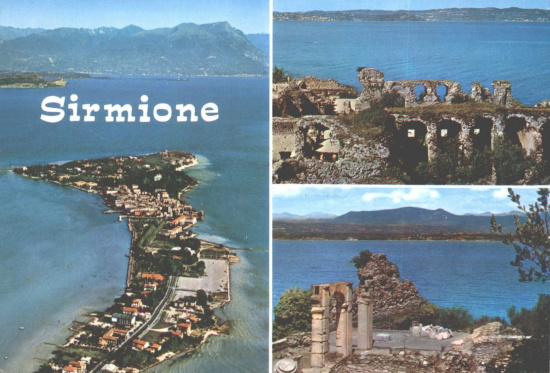
A Postcard from Sirmio
written to Gaius Valerius Catullus,
September 2026 A.D.
Lake Garda’s wide, and rippling clear blue
Beneath a broad and sumptuous blue sky.
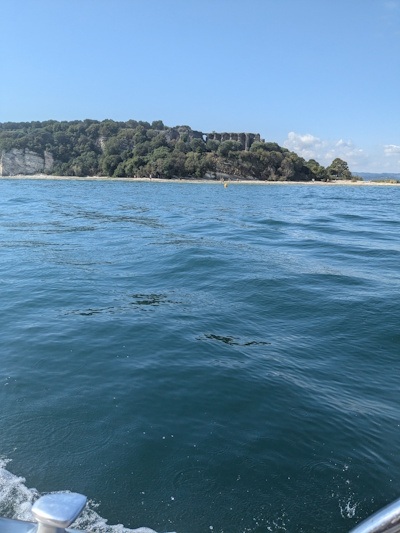
Our full boat chugs methodically to
The almost-island that we now see lie
On our horizon. We’ll be there at last,
Where you lived, twenty centuries long past.
Its silhouette of densely-wooded green
Gets clearer and more welcoming as we float
Towards it. This is what you would have seen
As you came southward on your bean-shaped boat,
And saw home with nostalgia and surmise.
Mine now are an excited pilgrim’s eyes.
Your poem makes your boat miraculous,
A speeding marvel that was born a tree;
What would you make of the craft that carries us,
Across the lake with bland efficiency?
And what would you have thought of its non-stop
And cheesy soundtrack of Italian pop?
We glimpse the Roman ruins - excavated
By archaeologists exploring caves, I read.
They found the remnants of a villa, dated
After your time, and very posh indeed.
Your later family, it seems did much, much better
Than you – a great poet, not a great go-getter.
The mediaeval now starts to intrude
Upon the coastline. Here Verona’s swells
Built a big bossy castle of the crude
‘Look at me, I’m powerful’ type, which tells
The neighbours that they ought to keep away,
The Sclaglieri were the toughs who here held sway.
We landed, and the boat disgorged us all
On a seething concourse. There were surely more
Tourists here than could fit upon one small
Peninsula. What had they come here for?
Had they come like me with literary dreams?
It seemed their major interest was ice-creams.
I’ve never seen so many gelaterias
There must be half an acre, stall on stall,
Packed tightly! And the flavours are so various!
I have a quite strong urge to try them all.
If you’d seen this in your home, Gaius Valerius,
Would you have thought it sad – or just hilarious!
Beyond the ice-cream parlours there’s a maze
Of gift-shops, mostly. Sirmio Souvenirs:
Fridge magnets, baseball caps. Tight-packed displays
Of clichés to catch the eye. But it appears
To be Catullus-free. Do you mind that
Your name’s not featured on this tourist tat?
The consumers here seem mostly standard folk
From all sorts of countries who have come to see
What they’re told is a beauty spot. Of course the joke
Is their presence makes it not so. C’est la vie.
And poetry? Well, you’d be daft to look
Here for outlandish things - such as a book
Beyond these shops, fish restaurants; then, beyond
Those is a sort of park, that’s full of trees
And strolling tourists. I am fairly fond
Of trees, but time was short and these
Did not appeal. Turning back I didn’t get
To the (post-you) Roman ruins. This I regret.
But, with the help of Google maps, I meant
To find that one trace of you that could be seen.
In a teenager-filled square, your monument,
Looking cool and Brandoesque and slightly mean,
A version of your large poetic head stood there
Ignored by the young people in the square.
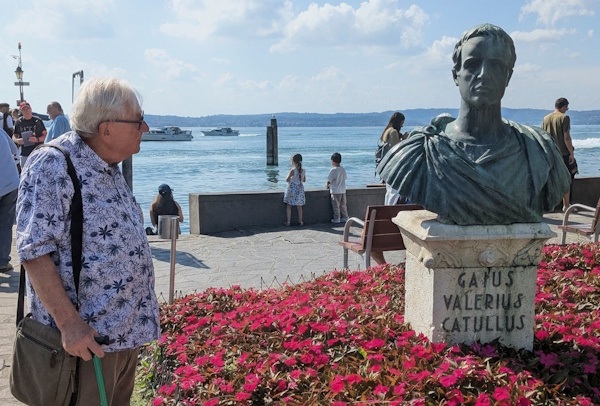
Apart from this fine monument alone
You’re absent. Sirmio seems Catullus-free.
To all this youthful crowd you are unknown;
Have they more to think about than poetry,
These youngsters shouting, flirting in your square,
With lives to live and energy to spare?
I see you in them as they push and shove,
And tease each other with their raucous humour,
And spend time falling in and out of love,
Or maybe spreading a malicious rumour.
Yes, much like you, so maybe youths like these
Have not changed much in twenty centuries.
You, like them, lived a very human life
But you wrote it down, and though that life was short
Your verse defined the glory and the strife
Of living; you’re the poet first that caught
The rich complexity of human feeling,
And told how unkind love can set us reeling.
I came to find your presence, like a dope,
After two thousand years of history.
Of course I never really had a hope
That I’d find more than absence. What’s to see
When words are the thing? Still I can say that I
Paid my respects. I came. Then said goodbye
George Simmers
If you have any thoughts about this poem, George Simmers
would like to hear them.
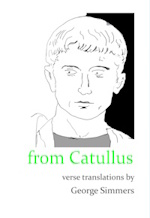
George
Simmers's translations of some of Catullus's poems
have been published in a booklet: from Catullus.
For details, click
here.