 |
169. Night Owl
I envy cats and dogs, how they comfortably curl and quickly descend into sleep. They don’t seem to be plagued with pressure points compressing nerves. They have had millions of more years than us to evolve a good fit with gravity and the distribution of their relaxed weight. They lie tucked into their limbs as if it was bedding. Poor human that I am, my arms get in the way. I want to temporarily take one arm off and then sleep on that side. Nor do cats and dogs appear anxious about deadlines or appointments. Disturb their sleep and they wake ready to engage.
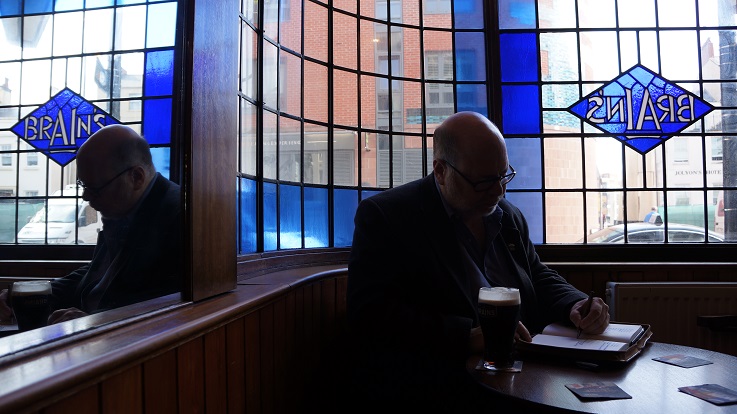
From fourteen years of age, I have thought myself a night creature. Succumbing to sleep was always difficult. “Just go to sleep,” was my father’s command, but how? I could lie in bed for hours watching the headlights and shadows of passing cars scudding across the ceiling. I could hear the traffic on distant highways, would listen to freight trains miles away.
It wasn’t insomnia. It was never insomnia. As difficult as it was for me to drop off into sleep, it was harder still to wake. I could readily sleep through the eight-hour allotment that health professionals insisted was necessary, once I had fallen asleep. It wasn’t allowed. An alarm would blast me out of bed. I had to stumble my way through school, never alert to classes, unless seeing a nymph made me horny. Grammar and mathematics didn’t have that effect on my hormones.
As an adult, and with the collected experience of hindsight, I came to believe I suffered from DSPD (Delayed Sleep Phase Disorder), once I learned what that was. My circadian rhythm was not in sync with the planet’s twenty-four-hour rotation. I was meant for a planet with a longer day. This was written into my genes and there was no cure. I was what society designated a “Night Owl”. Unlike insomnia, the disorder didn’t cause any health issues so long as I wasn’t in school or had to work for a living.
Surely, the unusualness of this sleeping pattern was well within the spectrum of human traits. When I first learned about it, less than 0.2% of the population suffered DSPD. More recently, I’ve read they are discovering far more, and that it is perhaps 7%. And people with ADHD, perhaps over 70%. That I have DSPD is speculation. I have never had a professional diagnosis.
It has had its benefits. Many sleepless nights have allowed me to explore a different world with fewer and unusual people. Some of the most engaging conversations unfolded after two o’clock in the morning. I have gone on long strolls, long drives, long adventures straddling a motorcycle that once resulted in my travelling from Pennsylvania to Colorado, mostly in the middle of the night. There is a lot less traffic.
Another advantage to being a night owl is that it allows me to escape the blinding sunlight and the oppressive heat of afternoons. Also, it separated me from the distraction of friends. The night gave me a chance to think things through and to write undisturbed. I wonder if unique experiences have given me unique perceptions. DSPD and being left-handed, did that mean I was wired differently? Who wants to be normal? I would gladly sacrifice normal to be interesting. Is being an undisturbed night owl what impels my creativity?
Much has changed in recent years. My entire life, I enjoyed blood pressure at the low end of normal. I have, in recent years, developed high blood pressure. I am plagued with symptoms of fatigue, weakness, and weight gain. Now I worry that it is no longer DSPD that keeps me awake, but – following an investigation using Google – what if I am suffering from hypercortisolism? That’s a word I didn’t know yesterday. And the next question is, do I want to extend my life at the expense of forsaking the inspiration that comes at night?
I am seventy-five years old. Maybe this is just normal for old age. That is what one doctor told me. Sometimes, I think I go to more medical appointments than concerts. I lose sleep to reach medical appointments. Why must they be so early? What if I am diagnosed with hypochondria at the next appointment? Fast, someone prescribe me a placebo.

Mr Bentzman will continue to report here regularly about
the events and concerns of his life. If you've any
comments or suggestions, he would be pleased to hear from you.
You can find his
several books at www.Bentzman.com.
Enshrined
Inside Me, his second collection of
essays, is now available to purchase.